
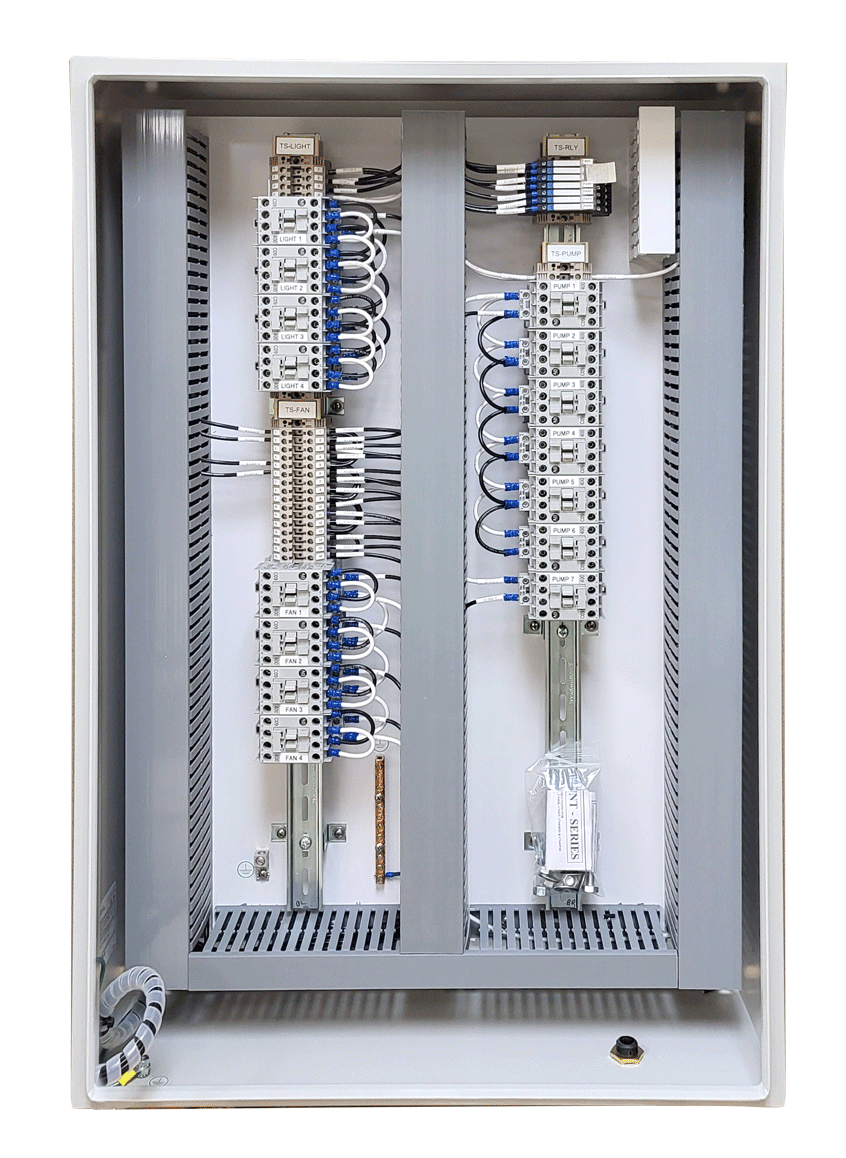
Contactor panels provide straightforward, electromechanical control for a wide range of industrial loads. Using contactors, overload protection, and simple control logic, these panels offer a reliable, cost‑effective solution for switching equipment on and off without the complexity of a full automation system.
Purpose
Contactor panels are designed for applications where equipment needs to be safely energized, de‑energized, or interlocked using durable, serviceable hardware. These panels:
- Switch and protect motors, heaters, lighting circuits, and solenoid‑driven devices
- Provide basic interlocks, permissives, and safety circuits
- Deliver dependable operation in environments where simplicity and robustness matter
- Support both standalone operation and integration with upstream control systems
This makes them suitable for general‑purpose industrial loads across many sectors.
Types of Loads Supported
Contactor panels can control a variety of electrical loads, each with its own characteristics and protection needs:
- Motors:
Start/stop control with overload protection for pumps, fans, conveyors, and small machinery. - Heaters:
On/off switching for resistive heating loads such as process heaters, tank warmers, and enclosure heaters. - Lighting Circuits:
Reliable switching for indoor/outdoor lighting, yard lights, and area illumination systems. - Solenoids & Actuators:
Control of valves, pneumatic solenoids, hydraulic solenoids, and small actuators requiring clean, simple switching.
This versatility makes contactor panels a practical building block for many industrial systems.
Key Features
A contactor panel focuses on essential control and protection. Typical features include:
- Motor‑rated contactors sized for the load type and duty cycle
- Thermal or electronic overload relays for motor protection
- HOA (Hand‑Off‑Auto) selector switches for local operation
- Control relays for interlocks, permissives, and sequencing
- Indicator lights for run status, faults, and power availability
- NEMA‑rated enclosures for indoor or outdoor environments
These features create a simple, serviceable control solution that operators can understand quickly.
Integration & Control Options
Contactor panels integrate cleanly into larger systems and can support:
- Start/stop signals from PLCs, RTUs, or building automation systems
- Limit switches, pressure switches, float switches, or thermostats
- Dry‑contact feedback for remote monitoring
- Multi‑load configurations using multiple contactors in one enclosure
This flexibility allows the panel to function as a standalone controller or as part of a broader automation architecture.
Operational Reliability
Contactor‑based systems are valued for their durability and predictable behavior. These panels:
- Withstand frequent cycling and harsh industrial environments
- Provide clear mechanical indication of contactor state
- Offer straightforward troubleshooting with accessible components
- Maintain safe operation through overload trips and interlock logic
This ensures long service life and minimal downtime for equipment relying on simple, robust control.