
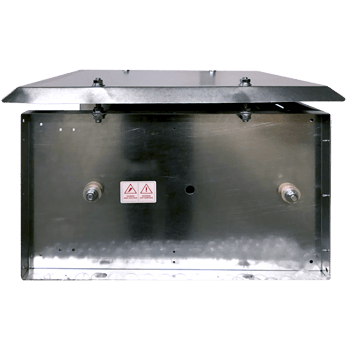
Braking resistor panels are used to dissipate the excess energy produced by a motor when it is decelerating or freewheeling after power is removed. When a motor is powered by a VFD, this regenerative energy can feed back into the drive and cause overvoltage faults unless it is safely absorbed. Control Innovations supplies braking resistor panels that provide a reliable dissipation path for this energy, preventing drive trips and supporting controlled motor operation.
A braking resistor panel provides a dedicated load for absorbing regenerative energy from a motor during deceleration. The resistor connects to the braking terminals of a VFD, allowing excess energy to be converted into heat rather than returning to the drive. This ensures stable operation during stopping, rapid deceleration, or freewheeling conditions.
Key Capabilities
Control Innovations braking resistor panels typically support:
- Integration of dynamic braking resistors in a wide range of wattage and resistance values
- NEMA 1, NEMA 12, or NEMA 3R enclosures depending on installation requirements
- High‑limit thermostats for over‑temperature protection
- High‑temperature termination kits for safe, durable connections
- Mounting options including top‑mount, side‑mount, or stand‑mount configurations
This provides a flexible solution for both indoor and outdoor applications.
Panel Construction & Components
A typical braking resistor panel includes:
- Dynamic braking resistor sized for the motor and drive
- High‑temperature wiring and termination hardware
- Thermostat or thermal switch for temperature monitoring
- Power distribution and protective components as required
- Enclosure suitable for the environmental conditions
This ensures safe dissipation of regenerative energy and long‑term reliability.
Installation & Wiring Considerations
Braking resistor panels are designed to integrate cleanly with VFD systems through:
- Direct connection to the VFD’s braking terminals
- High‑temperature cable rated for the application
- Recommended conductor insulation rated at approximately twice the nominal system voltage multiplied by √2
- Clear labeling for field wiring and service access
These considerations support safe installation and consistent performance.
Applications
Braking resistor panels are commonly used in:
- Conveyors and material‑handling equipment
- Hoists, cranes, and lifting systems
- High‑inertia loads requiring controlled stopping like winders
- Fans, pumps, and rotating equipment with long coast‑down times
- Any VFD‑driven motor that generates regenerative energy during deceleration
They provide a dependable method for managing excess energy and preventing drive overvoltage conditions.