
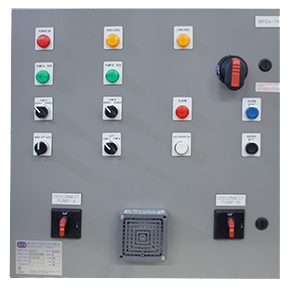
Automatic pump alternator panels are used in applications where two or more pumps share the workload and require equal run time or backup capability. These panels manage pump rotation, monitor operating conditions, and automatically switch to the standby pump if the running unit fails or cannot meet demand. Control Innovations supplies pump alternator panels that support dependable operation and straightforward integration with pump stations and packaged systems.
An automatic pump alternator panel provides alternating control for multiple pumps to ensure balanced run time and consistent equipment usage. The panel also serves as a backup control point by switching to the alternate pump if the primary pump fails, trips, or cannot maintain system conditions.
Key Capabilities
Control Innovations pump alternator panels typically support:
- Automatic alternation between pumps for equal run time
- Backup pump activation if the running pump fails or reaches a fault condition
- Lead/lag or duty/standby operation modes
- Local operator controls for manual selection or override
- Alarm outputs for pump faults, overloads, or abnormal conditions
This ensures reliable operation and balanced equipment usage.
Panel Construction & Components
A typical pump alternator panel includes:
- Alternator relay or PLC‑based alternation logic
- Motor starters, soft starters, or VFDs depending on the pump type
- Power distribution and overcurrent protection
- Control power transformer or power supply
- Terminal blocks for level switches, pressure switches, and pump wiring
- Enclosures suitable for indoor or outdoor installation
This provides a compact, dependable control solution for dual‑pump systems.
Integration & Field Wiring
Pump alternator panels are designed to simplify installation and support consistent performance through:
- Pre‑wired terminations for pump motors and control devices
- Clear labeling for lead/lag selection, alarms, and field inputs
- Compatibility with float switches, pressure switches, and level transmitters
- Optional communication to SCADA or supervisory systems
This supports fast commissioning and reliable operation in pump stations, lift stations, and utility systems.